O Level stands for Ordinary Level. It began as a UK qualification and was replaced by the GCSE in England, Wales and Northern Ireland in 1988. Today Cambridge offers it internationally as the Cambridge O Level.
Who takes it. Cambridge O Levels are widely taken in countries such as Pakistan, Bangladesh and Sri Lanka, in parts of Africa, and at some schools in the UAE. Students usually take them at about 15 to 17, in a range of subjects including Mathematics, the sciences, English and Accounting.
How it compares. Cambridge O Level, Cambridge IGCSE and GCSE are all qualifications at about the same level. Cambridge O Level is graded A* to E. Content and exam style differ a little between them, and the school decides which is taken.
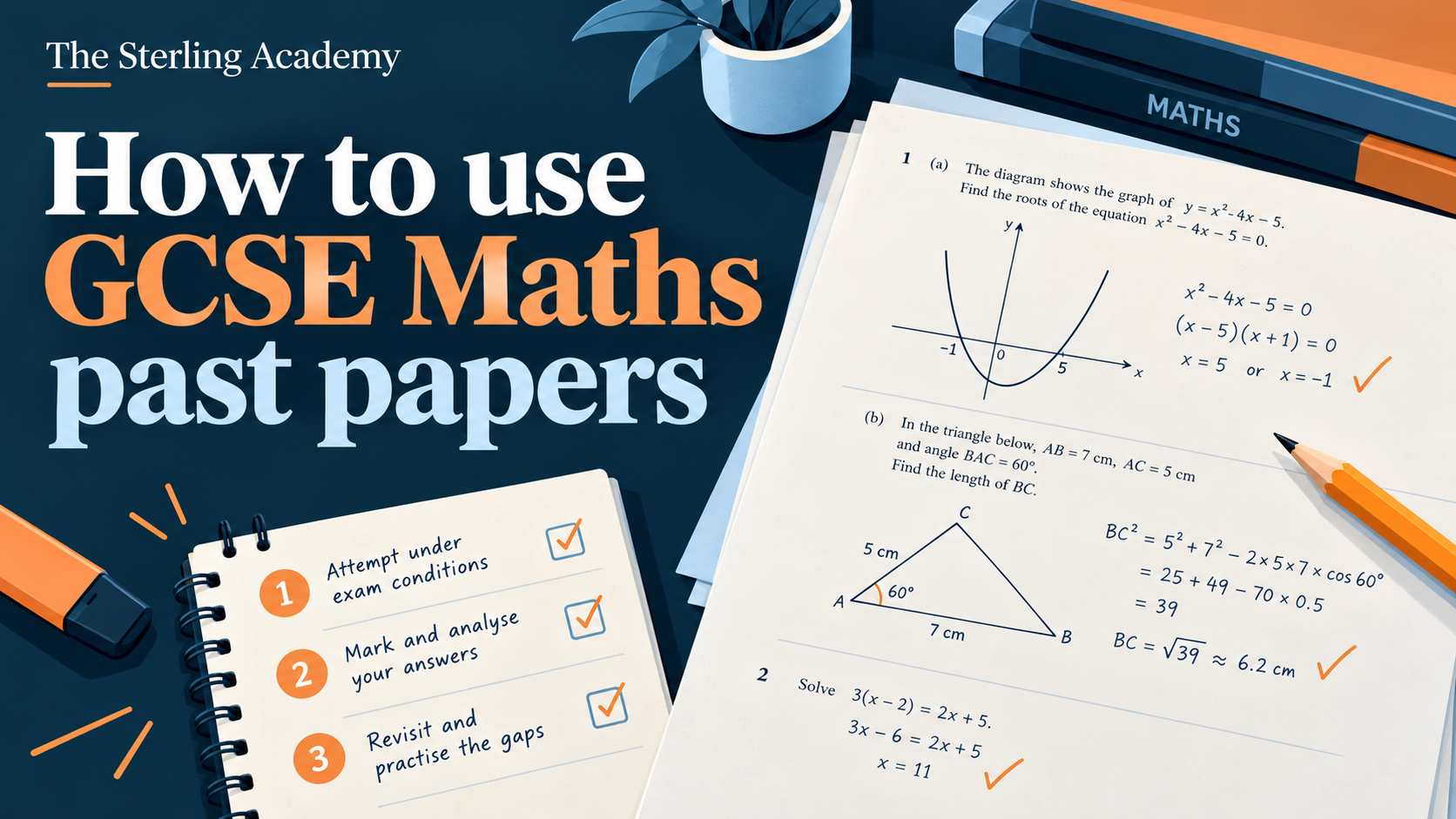
What exams look like. Most subjects are assessed by written papers at the end of the course, and the sciences include a practical paper or a written alternative. Past papers from the exam board are the best way to see what a question looks like, and to practise under time.
Preparing well.
Get the syllabus from the Cambridge website and tick off topics as they are learned.
Practise by topic first, then with whole papers.
Read the examiner reports, which explain where students lost marks.
Keep a short list of the mistakes you make and check it before each paper.
Is O Level harder than GCSE? The two sit at about the same level, so neither is simply harder. The difference is mostly in how the papers are set and examined, which is why practising on papers from your own board matters more than comparing qualifications.
Moving to the UK? Schools in the UK teach GCSEs or IGCSEs rather than O Levels, so a student who moves to the UK usually carries on with one of those. Much of the content overlaps, and a teacher can help with the topics and exam style that are new.
What comes after O Level? Many students go on to AS and A Level, often with Cambridge. The skills carry over, and a firm grasp of the O Level basics in Maths and the sciences makes the step up much easier.
How we help. We teach O Level one-to-one and online, with a plan that follows your child's syllabus, for families in the UK, the UAE and the US. The first class is free.