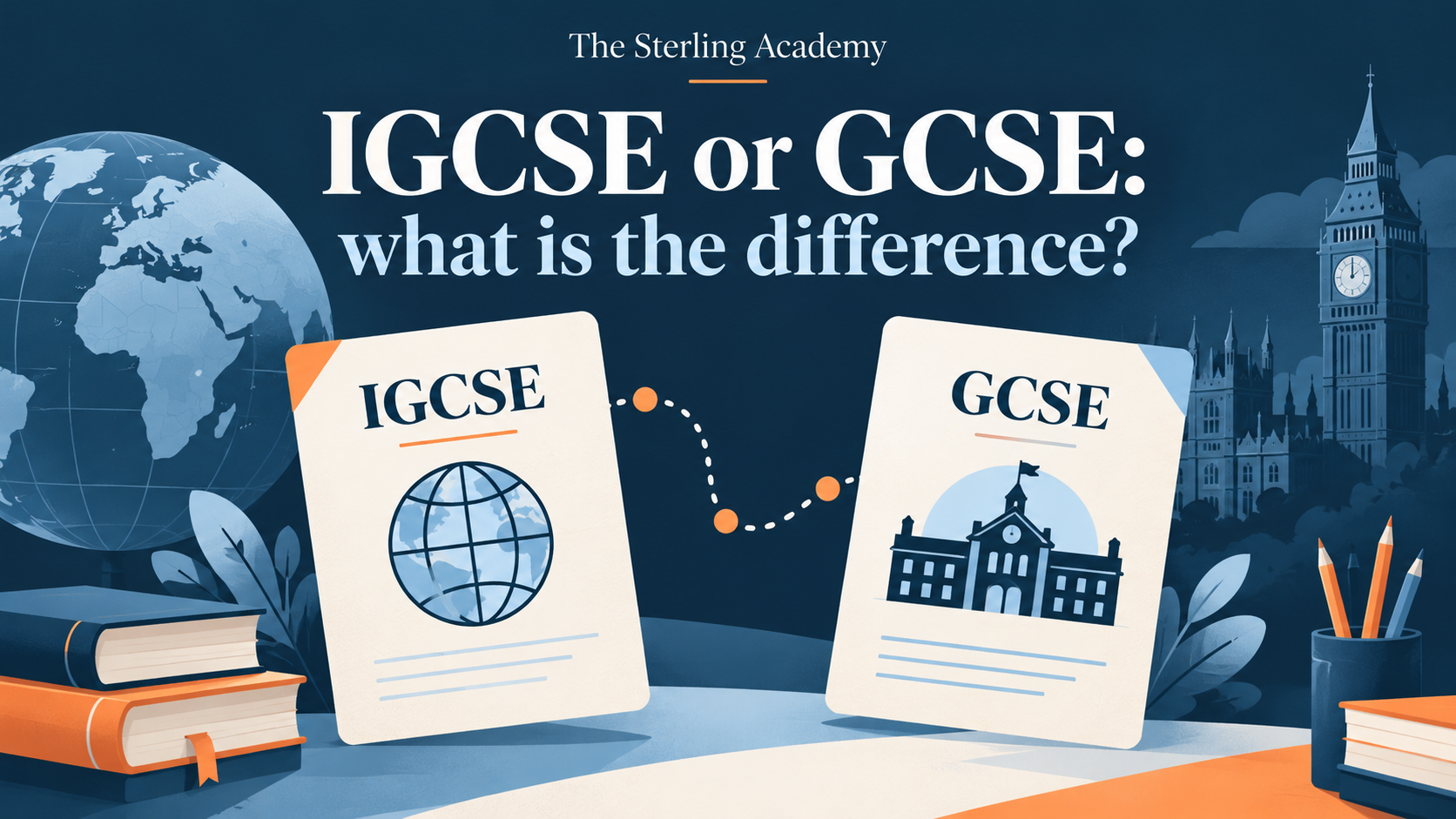
If your child's school mentions the IGCSE, you may wonder how it compares with the GCSE. Here is the short version, and then the detail.
The short version. The IGCSE (International General Certificate of Secondary Education) and the GCSE are qualifications at the same level, usually taken at about 16. They cover similar subjects. The IGCSE is offered by exam boards such as Cambridge and Pearson Edexcel and is taught in the UK and around the world, including at many British-curriculum schools in the UAE. The GCSE is the standard qualification in England, Wales and Northern Ireland.
Where they differ
Who sets them. GCSEs are set by boards such as AQA, Edexcel and OCR for schools in the UK. IGCSEs come from Cambridge and Edexcel's international qualification.
How they are assessed. IGCSE courses are usually assessed mainly by final exams, often with a practical paper or a written alternative in the sciences. Many GCSE courses are also exam-based now, so the gap is smaller than it used to be.
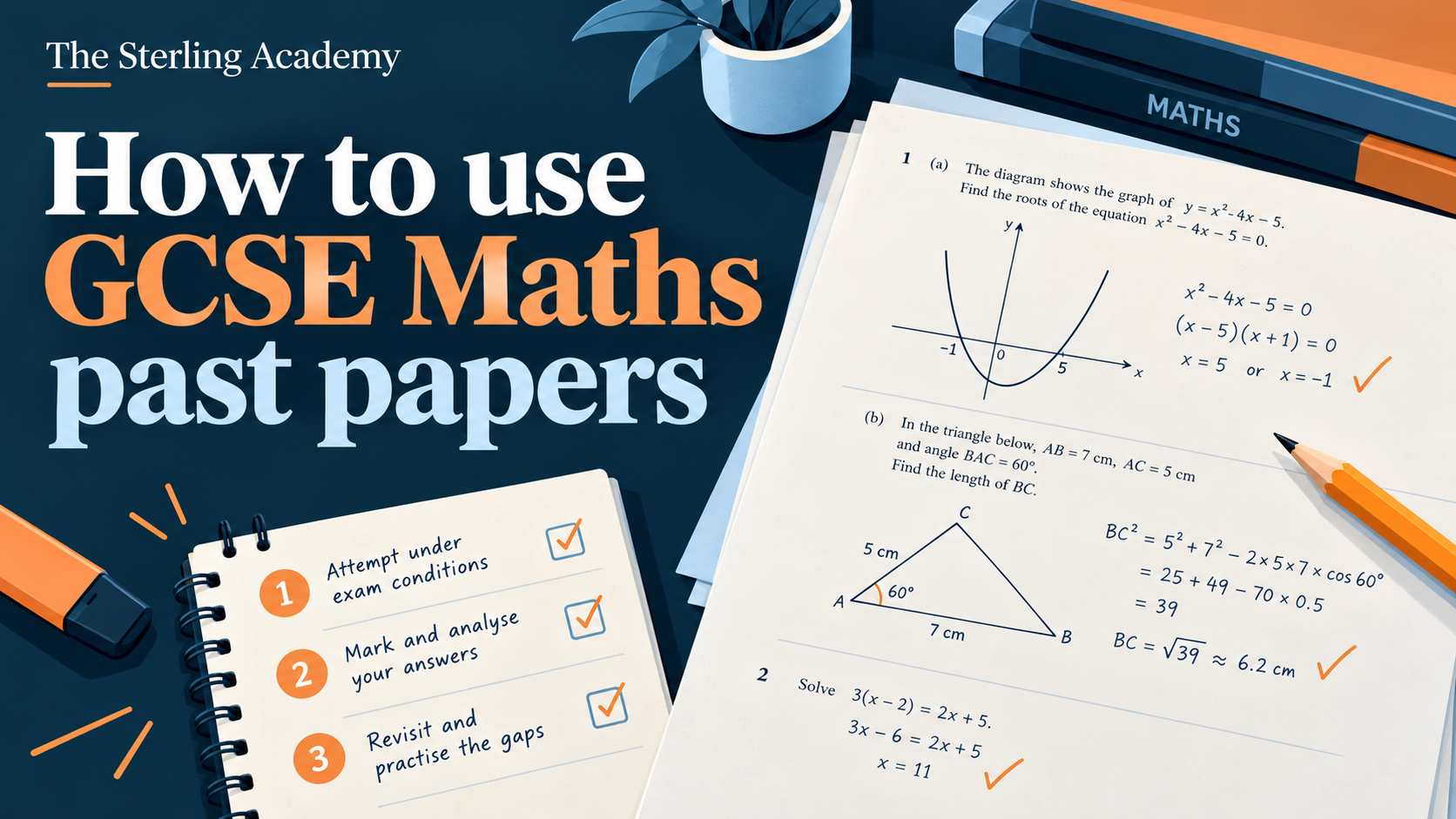
Tiers. Many IGCSEs are taken at Core or Extended tier (Cambridge) or Foundation or Higher tier (Edexcel). GCSE Maths and several other subjects also have Foundation and Higher tiers.
Grades. GCSEs in England are graded 9 to 1. Edexcel's International GCSE also uses 9 to 1, and Cambridge offers both a 9 to 1 version and the older A* to G scale in some subjects.
Where they are taught. Most UK state schools teach GCSEs, and some UK independent schools teach IGCSEs. Many international schools teach IGCSEs, and British-curriculum schools in the UAE often teach a mix, so a student may sit GCSEs in some subjects and IGCSEs in others. Some schools in the US teach Cambridge IGCSEs too, although most US students follow their state's high school courses instead.
Which should we choose? In most cases the school decides, so ask which one your child will sit and which board. Both are widely accepted for sixth form, college and university entry, but if your child has a specific plan, check with the place they hope to apply to.
Moving country? Families who move between the UK, the UAE and the US often find that the new school teaches a different qualification or board. Ask the new school early which one it uses and whether your child can stay on the same course. Much of the content overlaps, so a teacher can find and fill the topics that differ.
How we help. Our teachers tutor IGCSE and GCSE one-to-one and online, following your child's own board and tier, for families in the UK, the UAE and the US. The first class is free.