GCSE
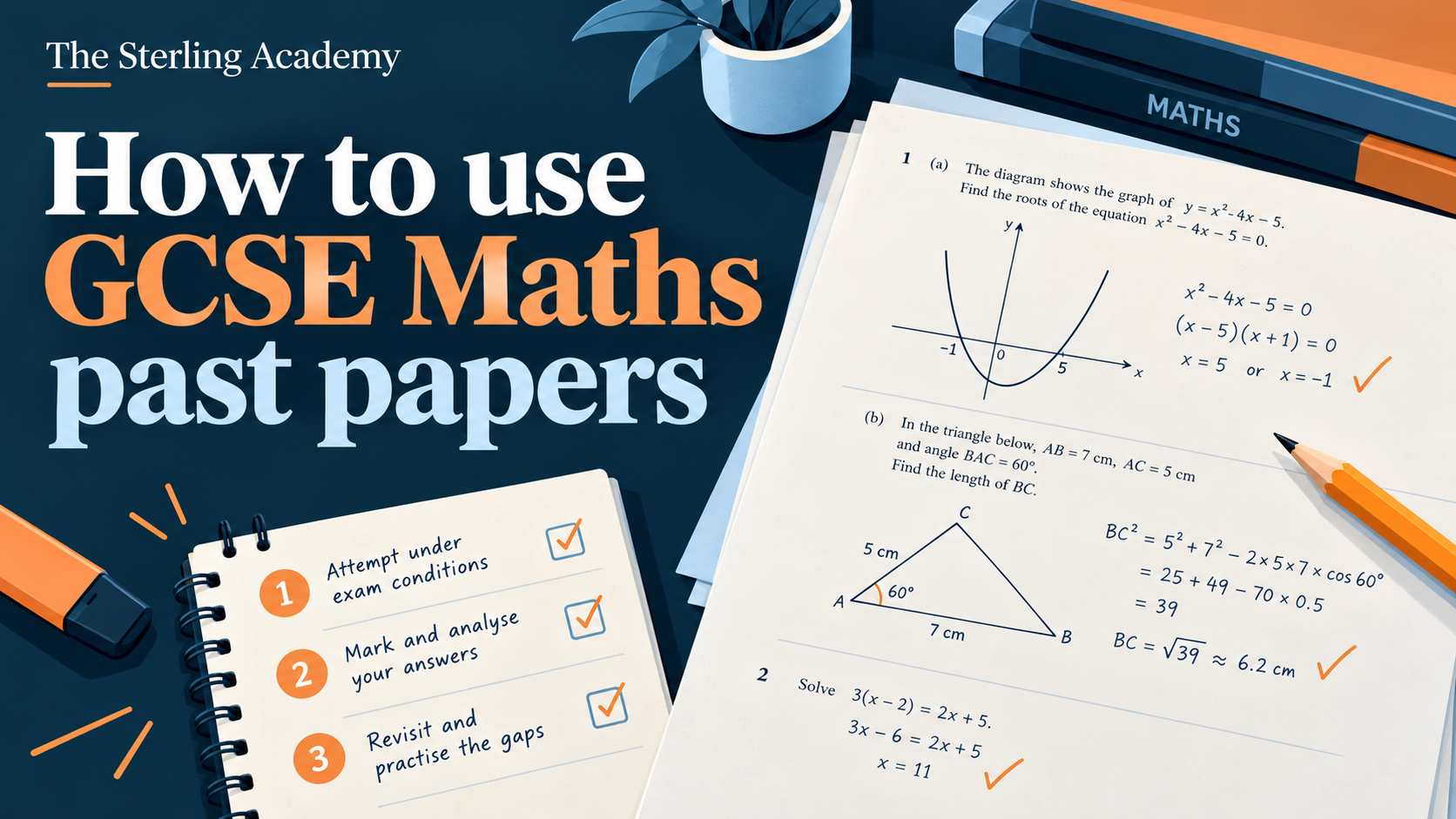
How to use GCSE Maths past papers
Where to find GCSE Maths past papers, when to start them and how to mark them, so that each paper shows your child exactly what to revise next.
Arooj Shahid · 26 Oct 2026 · 4 min read
A step-by-step plan for GCSE Maths revision: find the gaps, practise by topic, work on the calculator and non-calculator papers, and use past papers well.
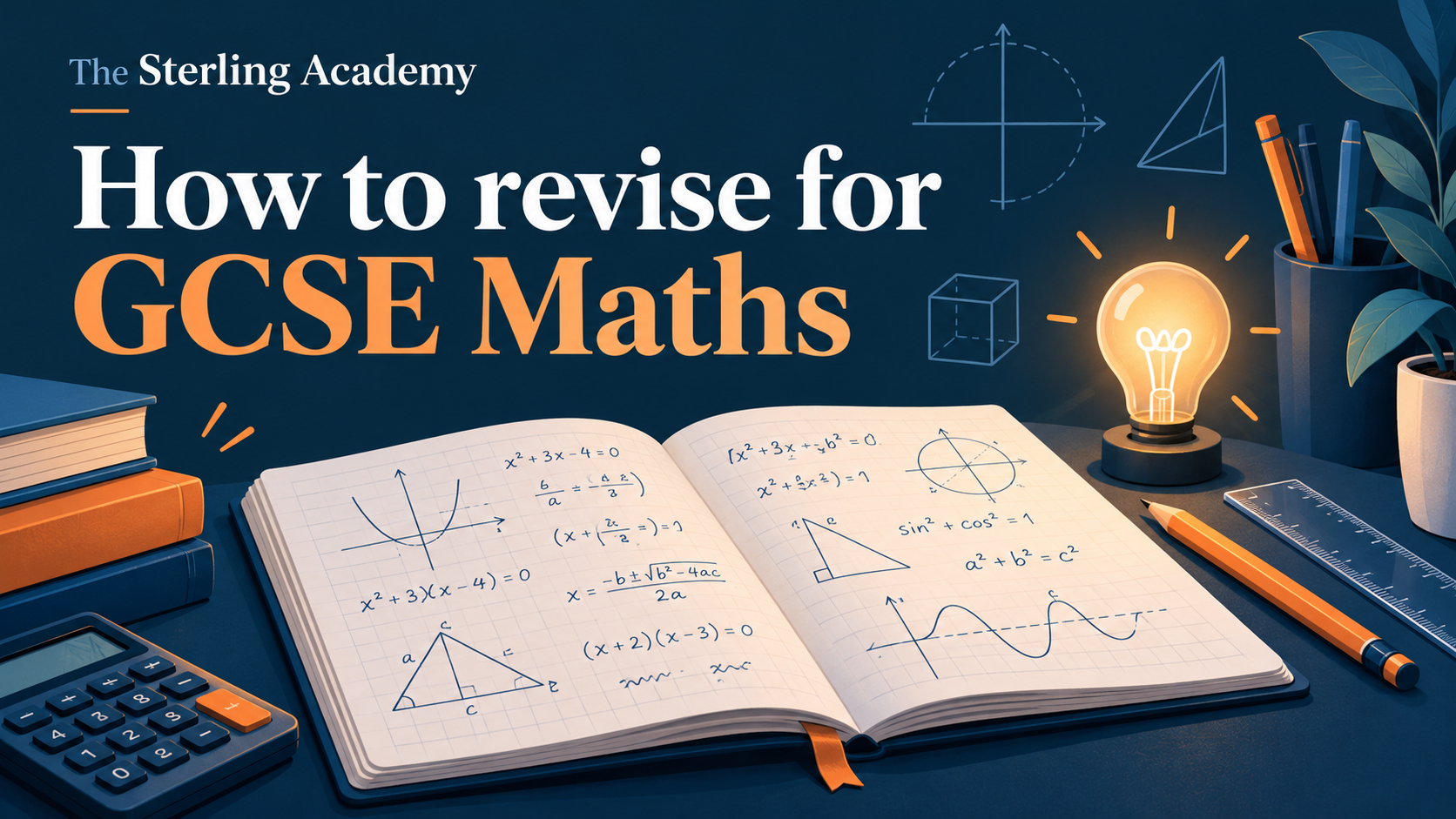
Maths revision works best when it is active. Reading notes feels productive but rarely changes how a student answers a question. Here is a plan that does. It works for GCSE Maths in the UK and at British-curriculum schools in the UAE, and for the International GCSE too.
1. Know what is on the course. GCSE Maths covers five areas: number, algebra, ratio and proportion, geometry and measures, and probability and statistics. Write the topics for each area on one page. This is your checklist.
2. Find the gaps. Try a mixed set of questions without notes and mark each topic green, amber or red. Do not start with what you enjoy. Start with the reds that many other topics depend on, usually fractions and algebra.
3. Practise by topic. Do a short block of questions on one topic, check the answers, then redo the ones you got wrong the next day. Repeating a mistake correctly is what makes it stick.
4. Show your working. Marks are given for method, not only answers. Write each step on a new line so a marker, or you, can see where a slip happened.
5. Treat the non-calculator paper as its own skill. Practise fractions, percentages and number work by hand, and estimate first so you can tell if an answer is sensible.
6. Use past papers well. Do one in a quiet place, on time, once the topics are secure. Then mark it carefully with the mark scheme, and write down the topics you lost marks on. Those go on next week's list.
7. Keep it regular. Thirty focused minutes a few times a week beats one long session before the exam.
A simple weekly pattern. Two topic sessions of about thirty minutes, one session redoing last week's mistakes, and one timed set of questions at the weekend. Fit it around the school timetable, and add a full past paper once a month as the exam gets closer.
If your child is stuck on a topic and revision is not shifting it, a few one-to-one lessons can find the missing idea quickly. Our teachers tutor GCSE Maths online for families in the UK, the UAE and the US, and the first class is free.
Want help with GCSE Mathematics? The first class is free.
Where to find GCSE Maths past papers, when to start them and how to mark them, so that each paper shows your child exactly what to revise next.
Arooj Shahid · 26 Oct 2026 · 4 min read
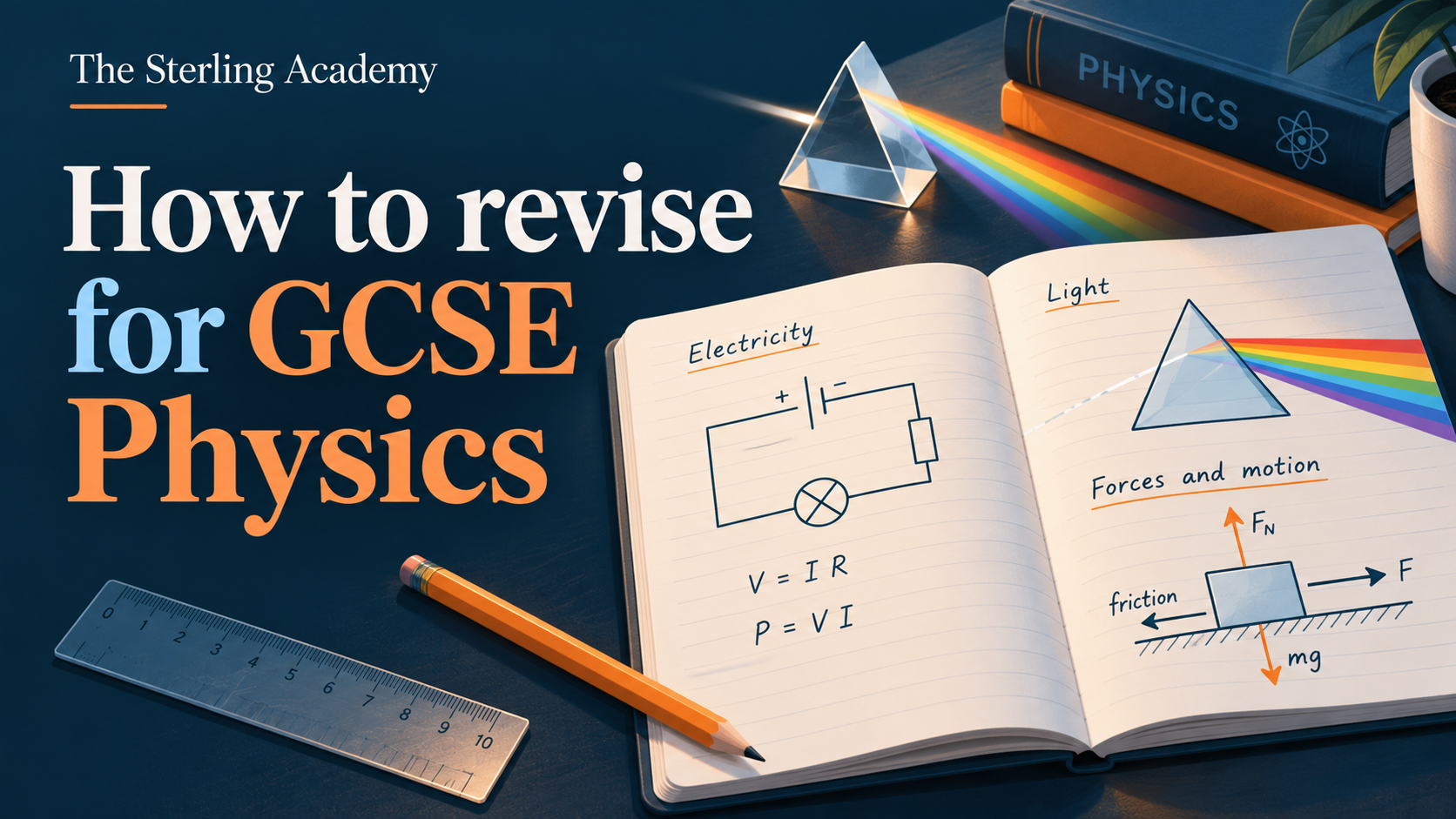
How to revise GCSE Physics: learn the equations and units, set out calculations the same way each time, prepare for the practicals and use past papers well.
Arooj Shahid · 26 Oct 2026 · 4 min read
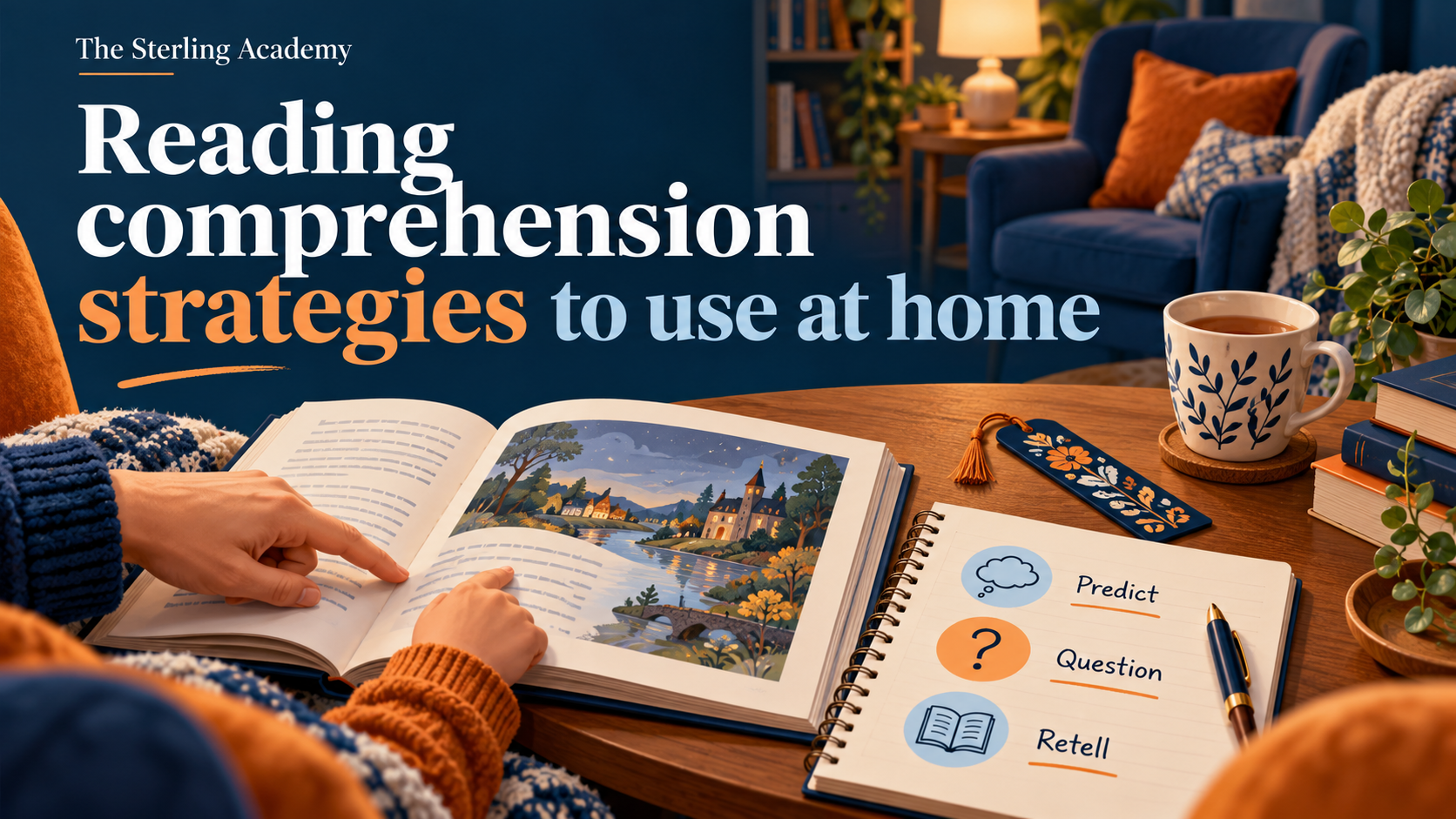
Simple reading comprehension strategies to use at home, from previewing a book to finding evidence in the text, and how they match the Common Core standards.
Arooj Shahid · 26 Oct 2026 · 4 min read
Enrollment takes about five minutes. Tell us about your child and the times that work, and we'll book their first class free: no card details, no obligation to continue.