A Level Maths is a big step from GCSE or IGCSE, and revision has to change with it. Here is a way to start, whether your child is in sixth form in the UK or at a British-curriculum school in the UAE.
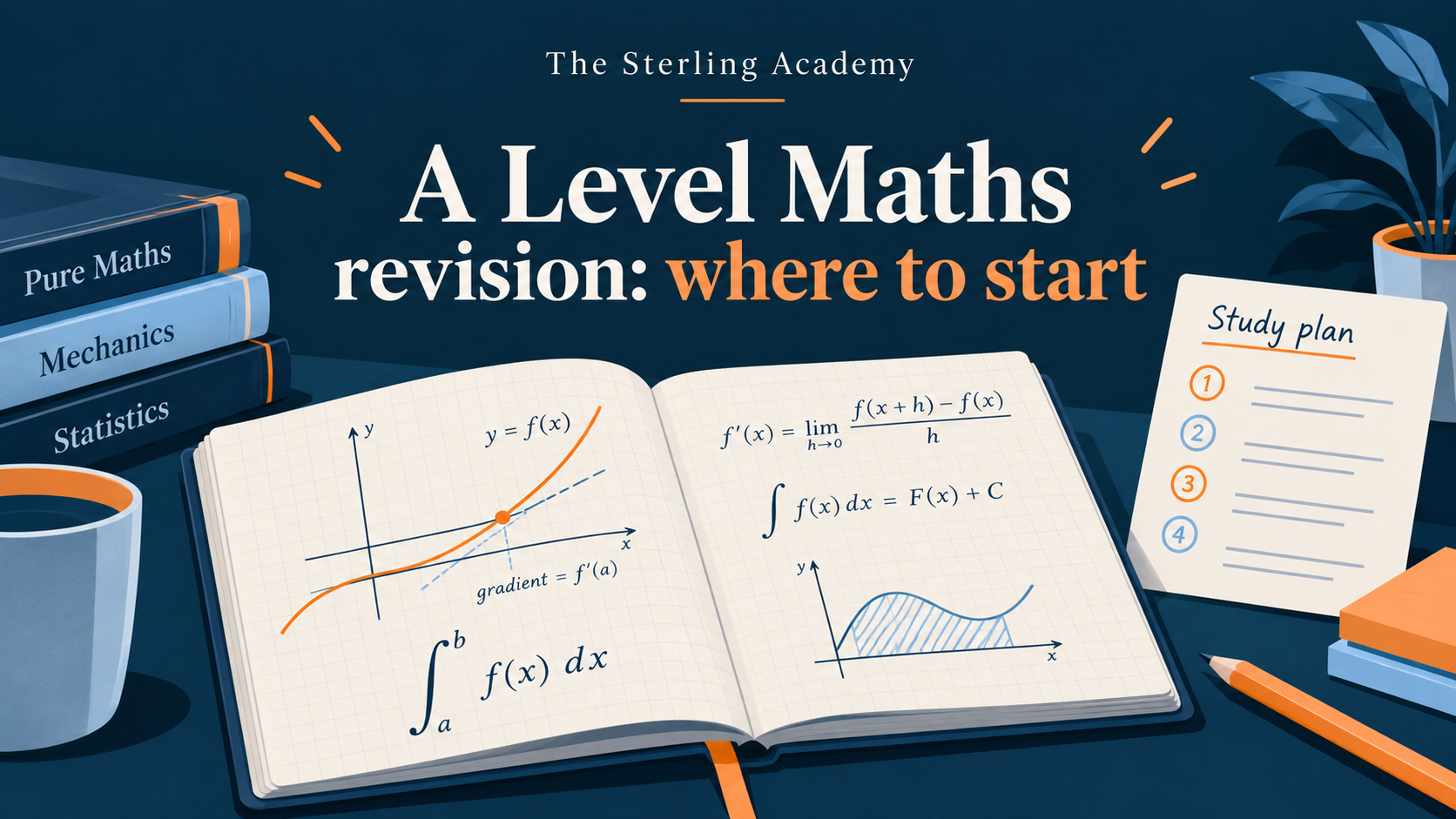
Know the three strands. A Level Maths has pure mathematics, statistics and mechanics. Pure is the largest part and the others depend on it, so it is the right place to begin.
Make algebra fluent first. Most lost marks at A Level are from algebra slips, not hard ideas. Spend time on expanding, factorising, rearranging, and working with indices and surds until it is quick and accurate.
Revise by topic, then mix. Pick one topic, such as differentiation, and work through questions from easy to difficult. Once a few topics are secure, mix questions from different areas so you practise choosing the method, which is what the exam requires.
Understand, do not memorise. If you cannot explain why a method works, you will struggle when a question is phrased differently. Try explaining a topic aloud as if teaching it.
Know your formula booklet. Learn what is given and what is not, so that none of your time goes on looking for it or on formulas you could have looked up.
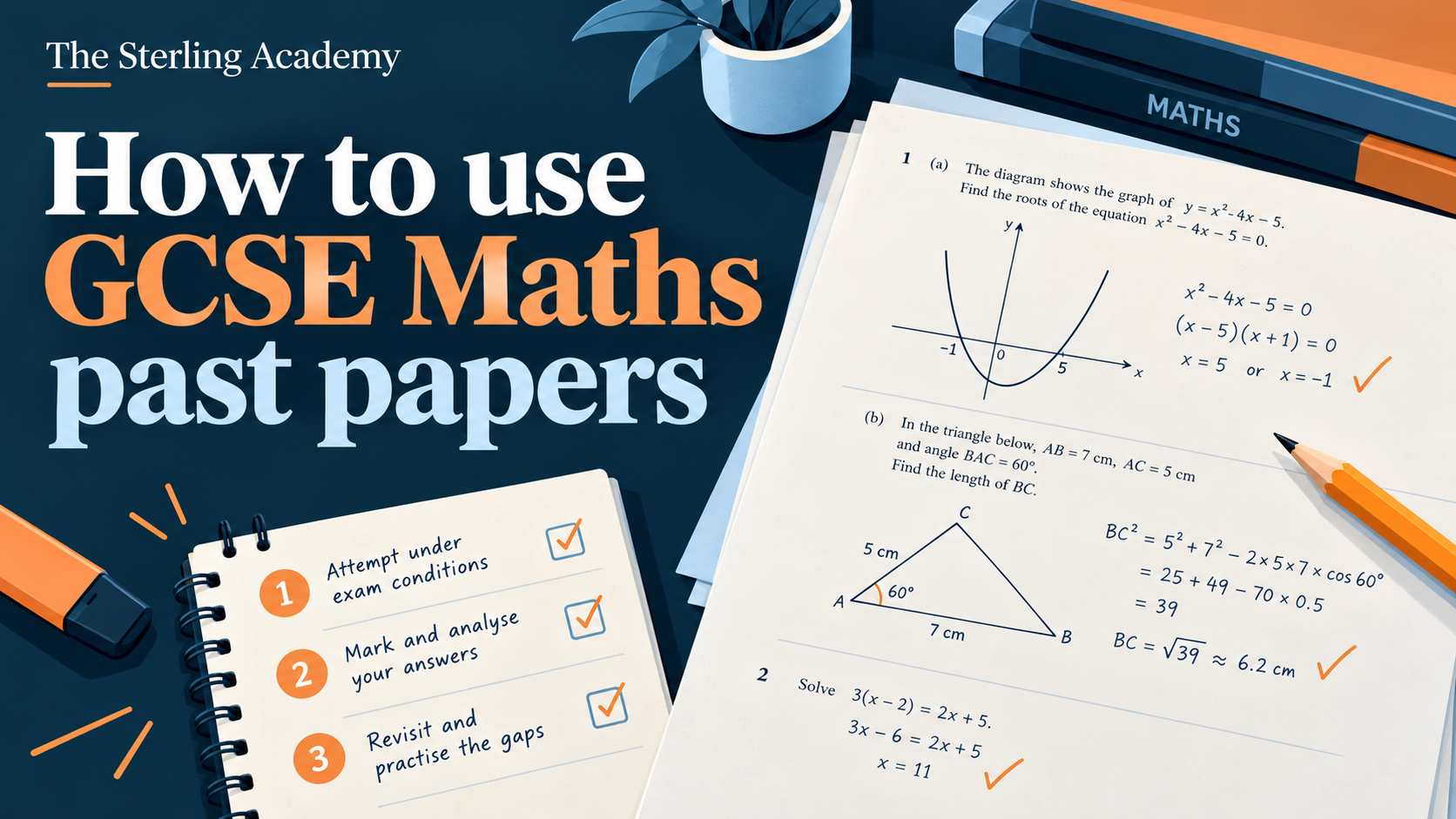
Use past papers as feedback. Do them under timed conditions, mark them with the mark scheme, and keep a log of each lost mark: a slip, a gap in knowledge, or a misread question. The log shows what to fix.
A simple weekly pattern. One pure topic, one applied topic (statistics or mechanics) and one timed set of mixed questions each week. Keep the mistakes log open beside you and add to it every time you drop a mark.
Go back to GCSE when you need to. If a question stalls on algebra or trigonometry, treat that as a signal to revisit the GCSE version of the idea for ten minutes, then return to the question. It is quicker than pressing on with a shaky foundation.
Ask early. If a topic stays confusing after a week of effort, get help. Gaps in pure mathematics carry into every later unit.
Our teachers tutor A Level Maths one-to-one and online for families in the UK, the UAE and the US, on AQA, Edexcel, OCR and Cambridge. The first class is free.